
Gold jewellery is precious and often has great emotional meaning. Whether it’s an engagement ring, a necklace as a gift or a gold chain inherited, it’s important to know whether it’s genuine gold or an imitation of a precious metal.
In this article, we explain how to identify genuine gold, what a gold sample means, and what signs indicate that a genuine piece is not gold but is gold-plated.
A gold coin means that the coin is made of a gold alloy with a fixed proportion of pure gold. Because pure gold is very soft, it is mixed with other metals to make the jewel more durable and suitable for everyday wear.
A gold-plated coin, on the other hand, is made of some other metal with a thin layer of gold applied. In appearance, it may be similar to genuine gold, but its value and durability are significantly lower. Over time, the gold layer may wear away, revealing another metal underneath.
When we talk about gold jewellery, we are talking about jewellery that has gold as its main component, not just the surface.
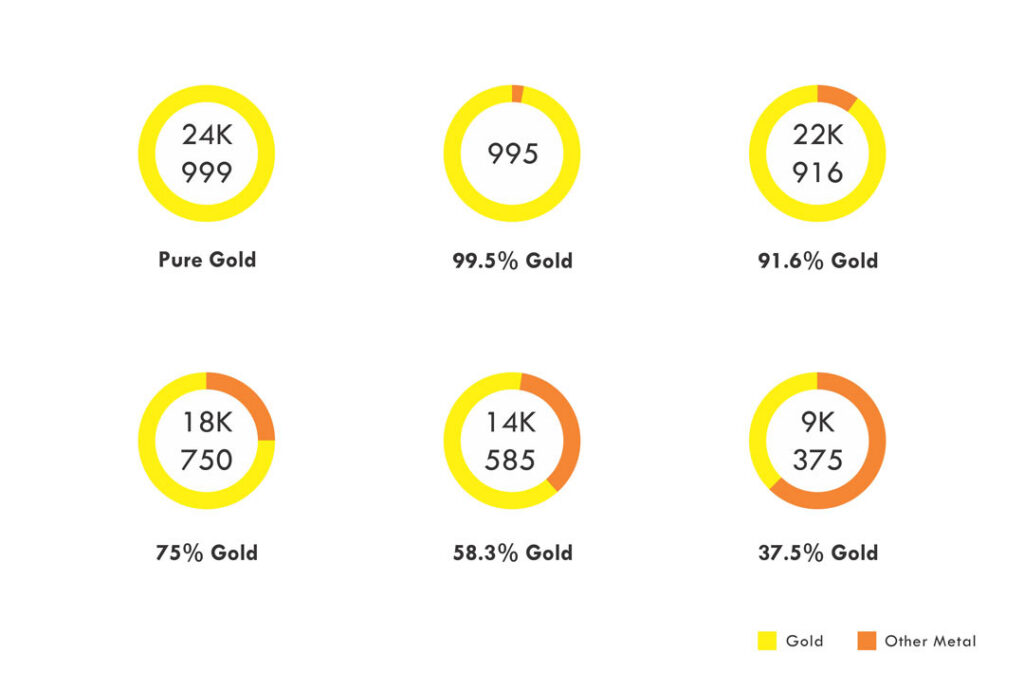
The most reliable way to identify genuine gold is to check a gold sample. The gold sample shows how much of the melt is pure gold. In Estonia and other parts of Europe, the most common samples are 375, 585, 750 and 999.
For example, a 585 sample means that 58.5 percent of the alloy is pure gold (the standard gold sample in Estonia), while a 750 sample means that a piece contains 75 percent gold, and 999 means that it is almost pure gold. In most cases, gold jewellery is marked with the corresponding assay mark, which is located on the inside of the ring or near the chain fastening.
However, it is worth bearing in mind that a test label alone does not always provide full assurance. It is also possible to falsify the marking, and therefore the stamped authenticity may also need further verification.
The gold jewel has an even and warm tone. If the jewel is mottled or uneven in hue, it may indicate a surface coating, i.e. gold-plated jewellery. It is also worth looking at the areas most likely to come into contact with skin or friction. If the edges or higher points start to show a different kind of metal, it is more likely to be a gold-plated item.
Gold jewellery may fade over time (if it has a shiny surface, the matted surface may become shinier than it was originally), but the colour does not change drastically over time. The exception to this is white gold, which wears off the rhodium layer over time, and if the ring is platinum plated it will fade to grey, if not it will fade to yellow (the original colour of the gold). If the jewel leaves a green or dark mark on the skin, this may indicate a high content of other metals.
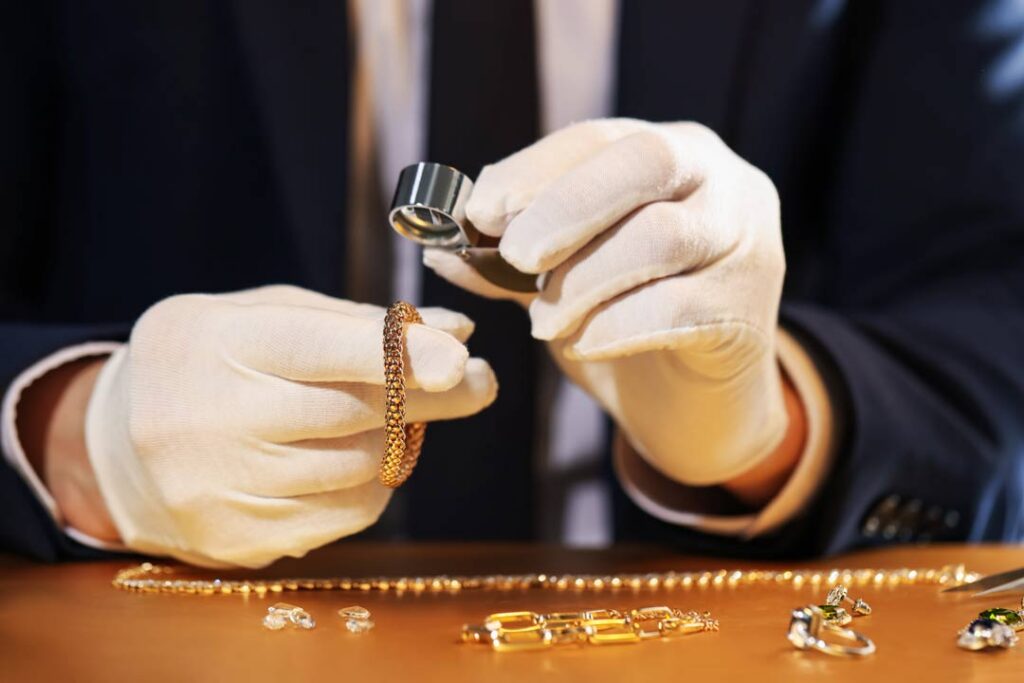
If you want full reassurance, especially before selling or buying a valuable piece of jewellery, it is wise to seek professional advice. Professional testing methods allow the composition of the metal to be determined accurately and reliably.
A specialist will be able to estimate the gold content and give a clear picture of the jewellery’s true value. This is particularly important if you are planning to dispose of your gold jewellery or want to know the market price.
Genuine gold retains its value and can be sold if needed. Gold jewellery is not only a beautiful accessory, but also an asset with a financial value. Knowing the gold sample and the actual composition of your jewellery will help you make informed decisions when buying and selling.
Awareness helps avoid fraud and gives you confidence that your gold jewellery is what it claims to be. Find different types of jewellery in the MATIGOLD online shop.